
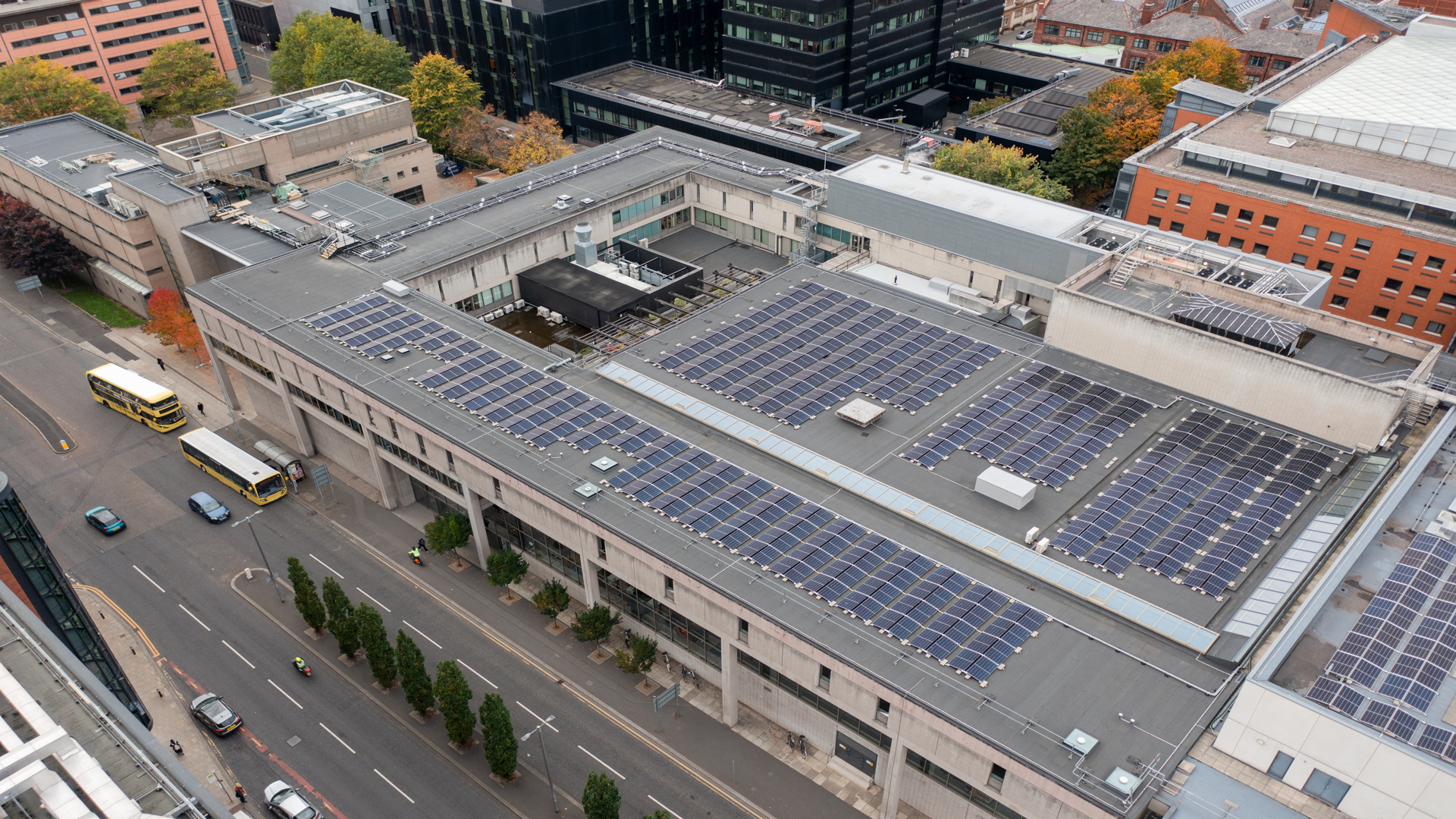
The Royal Northern College of Music (RNCM) undertook a major decarbonisation programme while remaining fully operational, placing significant pressure on its existing building fabric to perform better, not just differently. With energy demand rising and long-term resilience a priority, a fabric-first approach sat at the heart of the strategy, with the roof identified as a critical opportunity to deliver meaningful and measurable thermal performance gains.
Garland UK was appointed as technical roofing partner to support the refurbishment of multiple roof areas as part of a wider Salix-funded programme, with Dodd Group appointed as main contractor, coordinating the multi-trade environment across the live campus. Working closely with Dr John Hindley, Director at Twelvetrees Consulting, the RNCM estates team and the wider design team, Garland UK provided system design, thermal performance support and on-site technical leadership to ensure the roof retrofit contributed directly to the college’s decarbonisation objectives.
Quick Facts
StressPly Flex Plus
Education
0.10 W/m²K
300,000 kWh
The existing standing seam roof had reached the end of its serviceable life and was performing poorly thermally. Previous interventions had failed to address heat loss or resolve complex detailing issues, while the building below remained fully operational throughout the year. The refurbishment needed to improve fabric performance significantly to support RNCM’s wider decarbonisation strategy.
Delivery was highly constrained. Multiple contractors were working across the roof at the same time, plant equipment was being removed and reinstalled as part of wider M&E upgrades, and access routes were in constant use. The works needed careful sequencing to minimise disruption to teaching, rehearsals and student life.
From a decarbonisation perspective, the brief went beyond waterproofing. The roof had to deliver a clear uplift in fabric performance to support RNCM’s move away from gas and reduce overall energy demand.
Dr John Hindley explains, “One of the precedents I set was that we weren’t doing this with 100mm of insulation. It had to be 150mm. If you’re investing public money, you maximise the fabric performance first. That’s how you reduce bills, improve comfort, and genuinely decarbonise the building.”
The project was delivered in two phases and, due to its complexity and interfaces, became known on site as “the impossible job”.
Garland UK worked as both a technical roofing expert and active decarbonisation partner, supporting the client-led strategy while influencing key performance, system, and delivery decisions. The roofing works were installed by Absolute Waterproofing, a Garland UK Approved Contractor, working under Garland UK’s technical oversight and quality assurance regime to ensure the system was installed in line with the design intent and performance requirements.
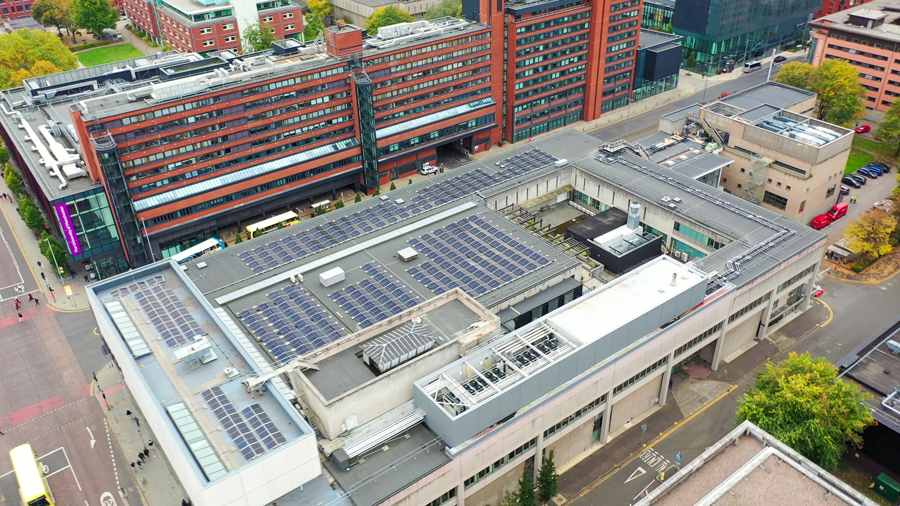
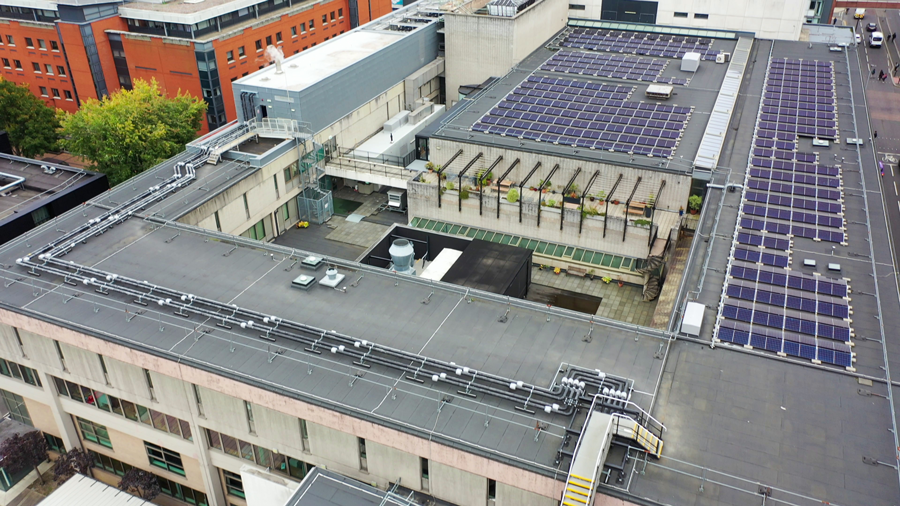
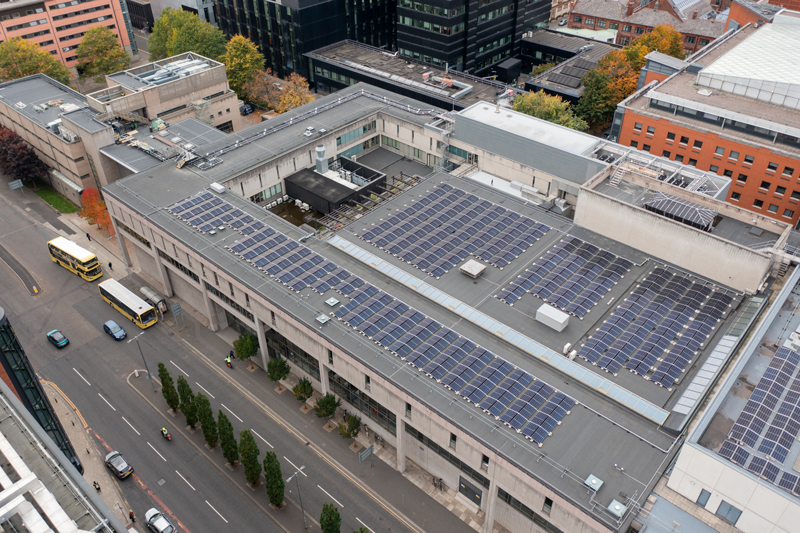
The existing standing seam roof was overlaid with a three-layer StressPly Flex Plus bituminous membrane system, selected for its durability, detailing capability and speed of installation. This approach avoided unnecessary stripping out, reduced waste and allowed progress to be maintained despite heavy roof traffic and ongoing plant movements.
Working closely with Ian Palmer Architects, Garland UK supported design development and detailing, ensuring interfaces with plant, edge protection systems and drainage were resolved without compromising waterproofing integrity or thermal continuity.
The insulation build-up was increased to 150mm PIR, improving the roof U-value from 0.24 W/m²K to 0.10 W/m²K. This step change in thermal performance directly reduced heat loss and supported the wider low-carbon heat strategy being introduced across the estate.
Garland UK Technical Manager Dan Crowley provided ongoing support from initial survey to on-site project delivery, working closely with other trades and stakeholders to resolve challenges as they arose and keep the programme moving.
Dan Crowley comments, “This wasn’t a standard refurbishment. With multiple trades, plant movements and live interfaces, the roof had to work in the real world, not just on drawings. Our role was to make sure the system delivered performance, buildability and long-term resilience at the same time.”
The completed roof retrofit now plays a measurable role in RNCM’s decarbonisation programme. Across both phases, the thermal efficiency upgrade delivers approximately 300,000 kWh of annual gas savings, significantly reducing heat demand as the college transitions to lower-carbon heating systems.
The measured energy reduction data represent potential annual savings of up to £22,000 at current gas prices, driven purely by improved fabric performance rather than behavioural change or system optimisation.
The improved roof performance has directly supported measurable enhancements in the building’s internal environmental quality. As part of the wider decarbonisation programme, RNCM carried out pre and post project environmental monitoring using room sensors to track air quality, temperature stability and humidity across teaching and practice spaces.
By significantly reducing heat loss through the roof, the Garland UK roof refurbishment has helped stabilise internal conditions, allowing the building’s environmental systems to operate more effectively. The monitoring data shows a clear shift from previously poor and inconsistent conditions to stable, well-controlled internal environments, with improved air quality and reduced thermal fluctuation.
These improvements have enhanced comfort for students and staff, particularly in heavily used practice rooms, where consistent temperature and humidity control are critical to performance and wellbeing.
RNCM also secured long-term assurance through Garland UK’s 25 year Single-Point Guarantee. For a busy education estate, this removes uncertainty around future responsibility. The estates team has one clear line of accountability covering the roofing system design, Garland materials and installation workmanship, reducing risk and allowing long-term maintenance and capital planning to be managed with confidence.
Dr John Hindley reflects, “The college is really pleased that it’s got a roof system it’s not going to have to think about for many years. That confidence is important when you’re planning properly and trying to reduce risk across the estate.”
With the building fully operational and internal environments transformed, RNCM now benefits from a durable, high-performance roofing system that supports energy reduction, operational resilience and long-term decarbonisation goals. The project demonstrates how a well-designed roof retrofit can deliver far more than waterproofing alone, becoming a critical part of a fabric-first sustainability strategy.
More Projects
Fabric-first retrofit supporting RNCM’s decarbonisation strategy
Technical Manager Daniel Crowley supported RNCM’s complex roof retrofit, delivering measurable energy savings and improved thermal performance across the live education estate...
Heritage roof refurbishment at Tower Bridge
Garland UK delivered a heritage roof refurbishment at Tower Bridge, with technical manager Jack Costello overseeing quality assurance, conservation compliance and long term waterproofing protection...
Targeted Roof Retention Saves £150,000 at Riverside Mansions
Technical Manager Alex Kitis partnered with the client team to deliver a retention-led roof refurbishment at Riverside Mansions, avoiding full roof replacement and reducing project costs...